The 1-3-5 Rule: Plan a Day That Can Shrink
The 1-3-5 rule sorts a daily list into one big task, three medium tasks and five small ones. Learn to size each slot, leave gaps open and keep work visible.
By All-in-One Task Tracker by Cosmo Suite · Editorial policy
Published · 8 min read
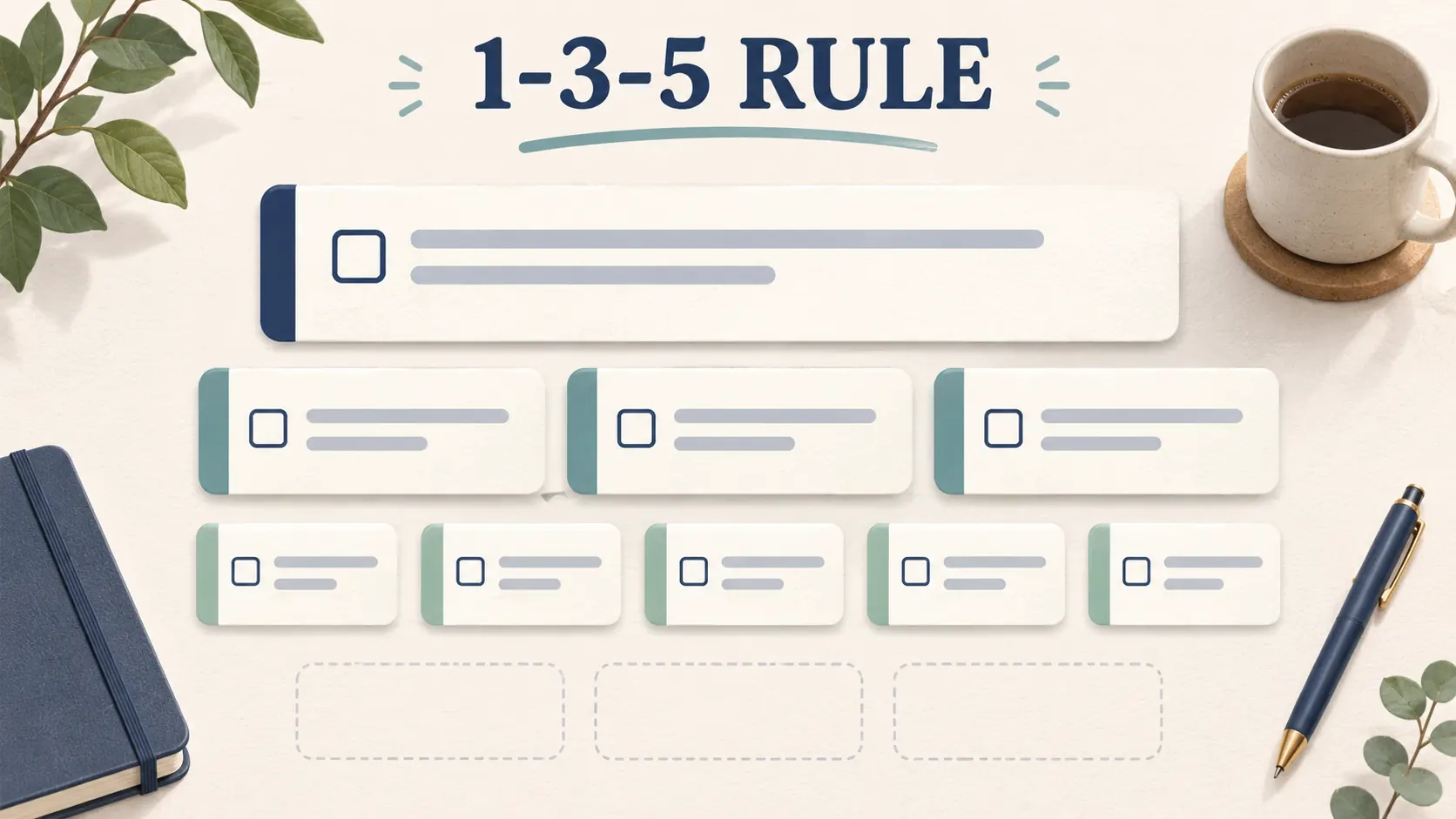
Use the 1-3-5 rule to sort a daily to-do list into one big task, three medium tasks and five small ones. Nine slots set the upper limit; leave unused spaces blank.
On a light day, one big task, two medium tasks and two small ones can be enough. Keep the four open slots visible. They leave room for changes without asking you to invent chores.
The Muse founder Alex Cavoulacos shared the rule with the publication. Its editors describe a nine-task list and say meeting-heavy days may need fewer. Their explanation of the 1-3-5 rule gives the basic shape. Set your task sizes from the time and attention your day allows. If work and home tasks are hard to keep visible together, the All-in-One Task Tracker (by Cosmo Suite: one Excel and Google Sheets file, 11 tabs, $9 once) keeps the rows in one file.
The 1-3-5 Rule at a Glance
The 1-3-5 rule is a daily list format with one large task, up to three medium tasks and up to five small tasks. The numbers mark available slots. They leave room for a short day, though no fixed list fits every schedule.
| Slot | How to choose it | Example |
|---|---|---|
| 1 big | The task that needs the largest block of attention | Draft a report section |
| Up to 3 medium | Tasks with a defined result and a smaller scope | Review a course outline; book a repair |
| Up to 5 small | Brief actions that can be completed on their own | Reply to an email; upload a file |
“Big,” “medium” and “small” depend on your day. A task that takes an hour may be big between classes and small on an open afternoon. The Post-it guide to the rule also recommends flexibility while keeping the list within nine items.
Treat the rule as a ceiling. If you have four tasks, sort those four and stop. If a meeting or urgent request takes part of the day, remove a slot before you start. The list should describe the time you can use, not an ideal day you are not having.
A Five-Task Thursday, Worked Through
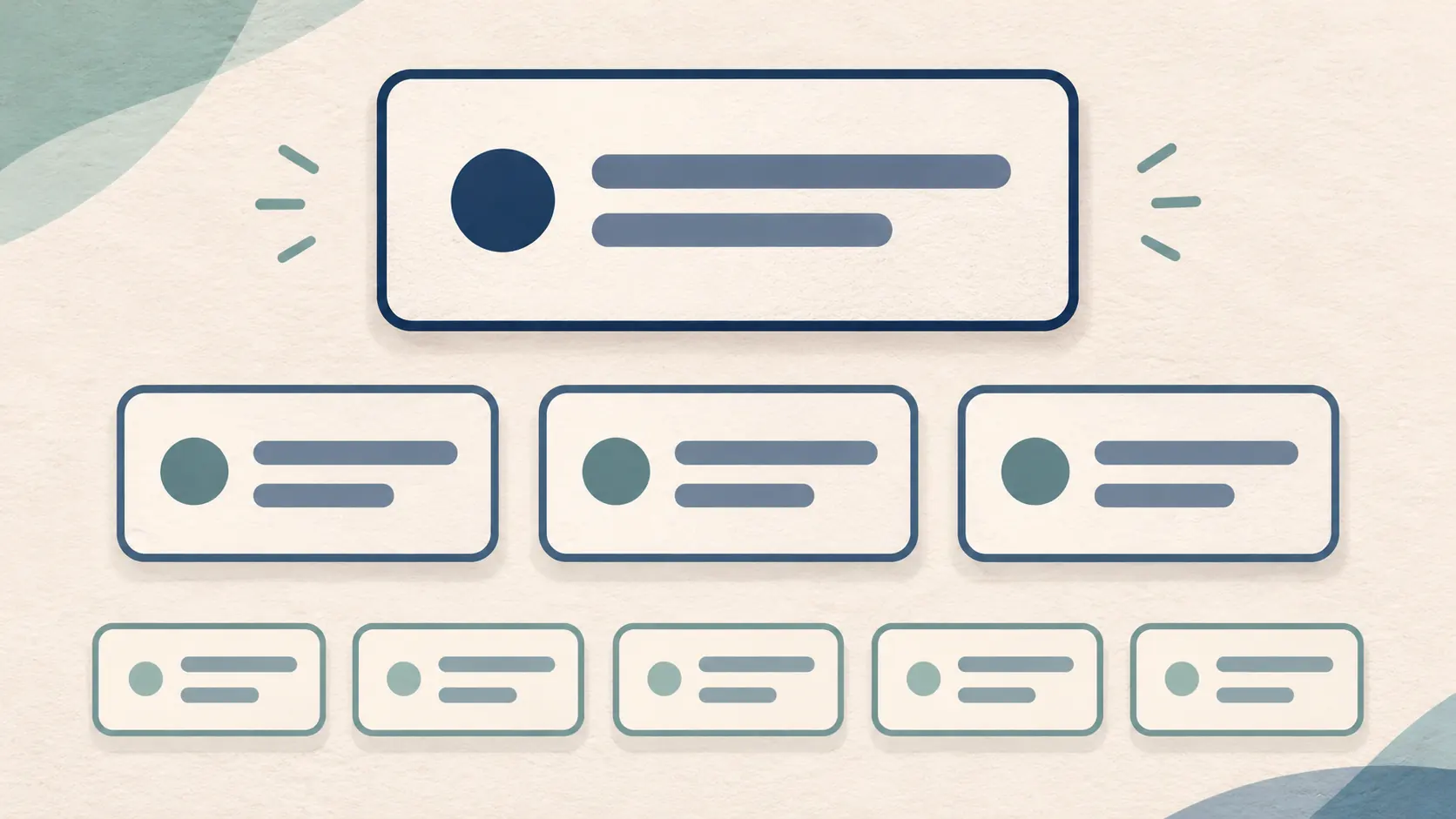
This fictional Thursday has five planned tasks: one big, two medium and two small. It uses the 1-3-5 shape and leaves four slots open for later work. Those spaces stay clear if plans change. The example does not describe a real person or promise a particular result.
| Size | Task | Finish line |
|---|---|---|
| Big | Draft the first section of a course paper | The section has a complete first draft |
| Medium | Review tomorrow’s lecture notes | Notes are checked and questions marked |
| Medium | Book a dentist appointment | A time is confirmed |
| Small | Upload the lecture slides | The file is in the course folder |
| Small | Reply to a tutor’s email | The answer is sent |
The paper section is big because it needs the longest stretch of concentration in this example. Reviewing notes and booking an appointment are medium tasks with clear stopping points. Uploading a file and sending a short reply are small tasks.
One medium slot and three small slots remain empty. They leave room for changes during the day without turning spare capacity into a new obligation. If the paper section takes longer than expected, adjust the list without treating the day as a failure.
Step 1: Choose One Big Task
Choose the one task that would make the most meaningful progress if you finish it today. Check the due date, what other tasks depend on it and how much uninterrupted time you can realistically use. Write down the result you want, not a broad project name.
“Work on the paper” can expand in several directions. “Draft the introduction and first section” gives you a point where you can stop. A finish line also makes it easier to decide whether the task belongs in today’s big slot or should be split across more than one day.
If two tasks both seem big, compare their deadlines and dependencies. One may need to happen first because someone else is waiting for it. You can also choose one as today’s big task and put the other on tomorrow’s list. The 1-3-5 rule does not decide priority for you; it gives you a place to record the choice.
Step 2: Pick Up to Three Medium Tasks and Five Small Ones
Sort the remaining tasks by the effort and attention they need in your specific day. A medium task has a concrete finish line and takes more than a quick administrative action. A small task is short enough to do between larger blocks without becoming a separate project.
These are working definitions; they do not set standard time ranges. If “reply to the tutor” takes longer because you need to check a policy first, split it into separate actions or move it to medium. If a large task contains several steps, keep the project out of the daily slots and write the next step as the task.
Count complete actions rather than every click. “Open the course page” and “find the assignment” may be one task if both are part of locating the deadline. Counting each tiny step separately can fill the five small slots before you reach any work that needs a decision.
Step 3: Leave Empty Slots on a Light Day
Keep unused slots empty when your real list has fewer than nine tasks. The Muse and Post-it both describe the rule as flexible. Post-it advises keeping the list within nine items; The Muse notes that meetings can call for fewer. A short list can still make the big task visible and keep small errands from being forgotten.
The reverse applies on a busy day. If your available time is already divided among classes, shifts or meetings, use fewer slots. Put only tasks that fit the day on the daily list and leave the rest in a separate backlog. The task list template walkthrough shows how one list can hold work beyond today without treating every row as due now.
You can also leave a slot open for work that arrives unexpectedly. That is especially useful when your day includes requests from other people. If every slot is already assigned, the first new task forces you to rewrite the list. A blank space makes the limit visible before the day starts.
Step 4: Keep Planned and Finished Work in One List
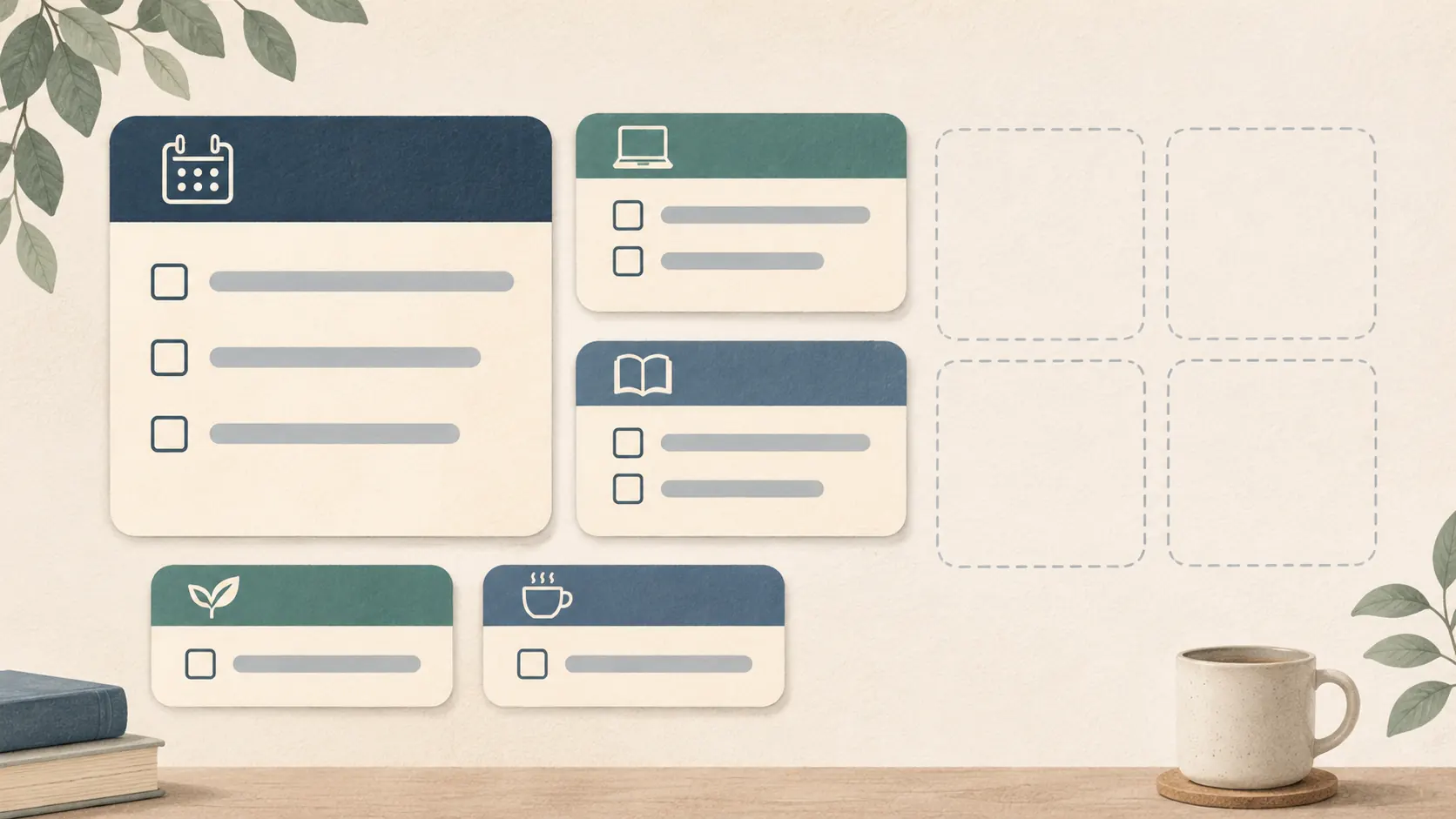
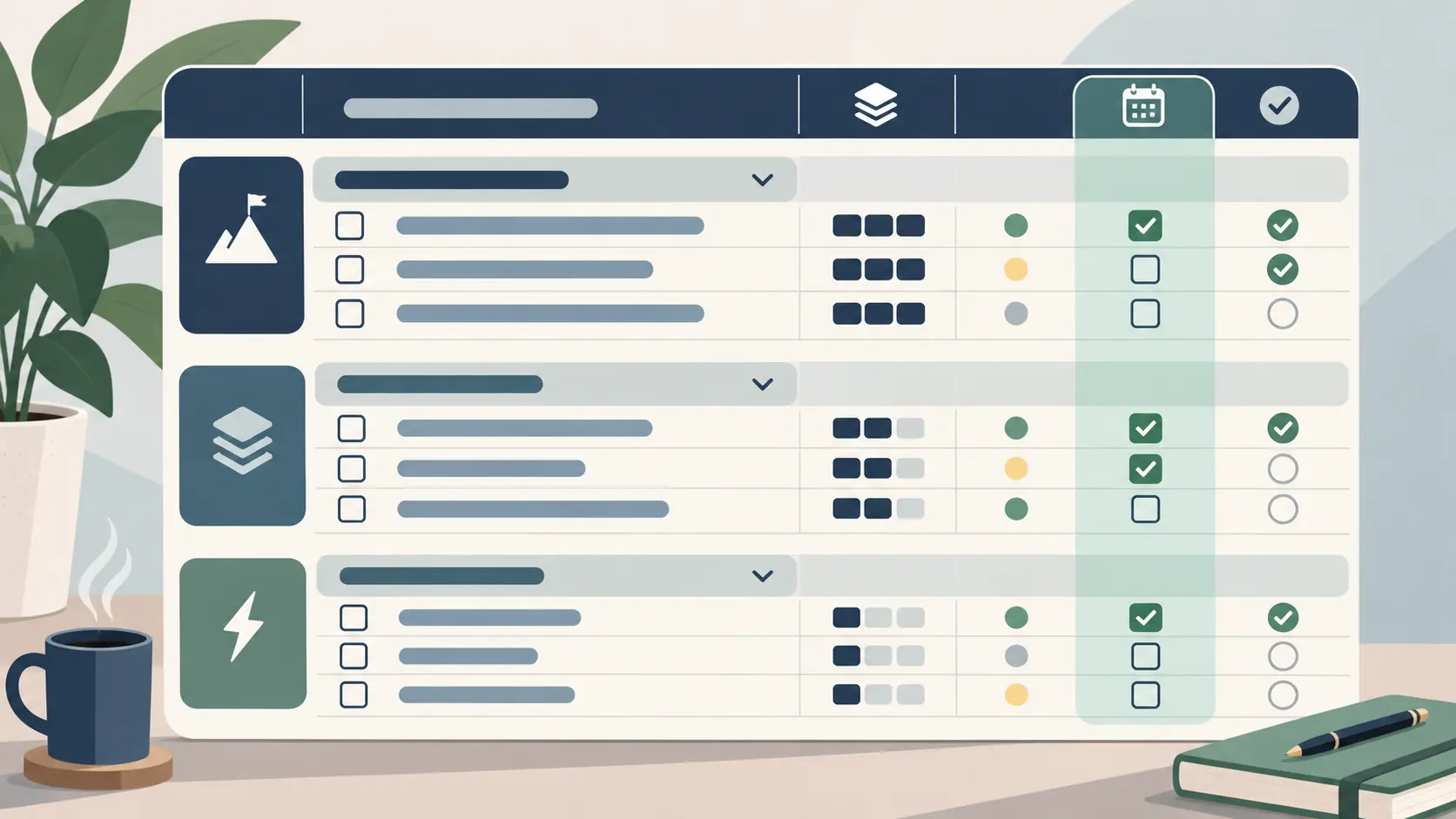
Use one row for each task and a status field such as “To do,” “Doing” or “Done.” Add a size field with “Big,” “Medium” or “Small,” then filter the list to the tasks you chose for today. This keeps your daily selection connected to the rest of your list.
Before you finish the day, review the unfinished rows. Decide whether each one still matters, needs a smaller next step or should move to another date. Do not copy every unfinished task automatically. A due date or dependency may have changed, and the next action may be clearer after you have started.
If you want to build the list yourself, the task tracker spreadsheet guide covers how task rows can connect to other views. If you prefer a ready-made file, a task tracker with list and priority views gives you one place to record tasks before sorting the day’s selection.
About the example and sources
The Cosmo Suite team prepared this guide. The Thursday list is a fictional example: its five rows are grouped by the attention each needs. We checked the method pages on 10 November 2026. Read who runs this site and the editorial policy for sources and corrections.
Where the All-in-One Task Tracker Fits
If you want one file to connect a daily list with calendar and priority views, the All-in-One Task Tracker for Excel and Google Sheets fits that setup. It has 11 tabs, including task tracking, recurring tasks, calendars, a Decision Matrix, Kanban and Gantt. It costs $9 once, according to the product’s current contents and price.
The list can hold more than the nine tasks you select for a single day. You can keep future work in the wider task list, then use the day’s 1-3-5 slots as a small selection from it. The spreadsheet does not choose your big task or decide whether a Thursday has room for five small actions. Those choices stay with you.
An app may suit you better if you need push reminders, automatic calendar sync or shared deadlines with a team. The tracker does not include those features. It is for someone who wants to own one file and use the same task entries across several spreadsheet views.
When to Use a Different Rule
Use a different method when task size does not help you choose what to do next. The 1-3-5 rule describes one big, three medium and five small tasks. It is separate from a five-minute task-start technique and from a five-level priority scale. Those names sound similar, but each answers a different question.
The five-minute rule often means starting a task for five minutes, then deciding whether to continue. The Muse describes that version as a way to begin. It answers a different question from 1-3-5: how to start instead of how to size the day's list. Five priority levels are separate labels. Define each one for the person or team using them.
If you keep debating which task matters most, write a reason beside it before assigning its size. A due date, dependency or commitment to someone else can explain why it belongs today. The University of Iowa's overview of to-do list methods lists 1-3-5 alongside other approaches.
Start with the tasks you already have. Pick one big task, add only the medium and small actions that fit your actual day, and leave the rest of the slots blank.
Frequently asked questions
What is the 1-3-5 rule?
The 1-3-5 rule shapes a daily to-do list around one big task, three medium tasks and five small ones. Nine is the upper limit. Leave slots empty when your day has less work or less time.
How do I use the 1-3-5 rule on a light day?
Write down your tasks and sort them by size. A light day might hold one big task, two medium tasks and two small ones. Leave the other slots blank instead of adding chores to reach nine.
What counts as a big task?
A big task takes the largest share of your available focus and has a clear finish line. It might be drafting a report or preparing for an exam. Size it against your day; there is no universal time limit.
What is the 5-minute rule for productivity?
The phrase often describes starting a task for five minutes, then deciding whether to continue. That differs from the 1-3-5 rule, which groups tasks by relative size instead of setting a starting timer.
What are five levels of priority?
The 1-3-5 rule has no five-level priority scale. If you use one, define each label for your list. For example, you might choose urgent, high, normal, low and none. Add those labels only if they help you choose what to do next.
Does the 1-3-5 rule work for everyone?
The 1-3-5 rule is a planning heuristic, not a guarantee. If urgent requests, meetings or shared deadlines shape your day, use fewer slots or choose a calendar or task app that supports them.